
The tree arrived before the worms
Day 15 and 16 of the silk worm cycle in progress at my farm
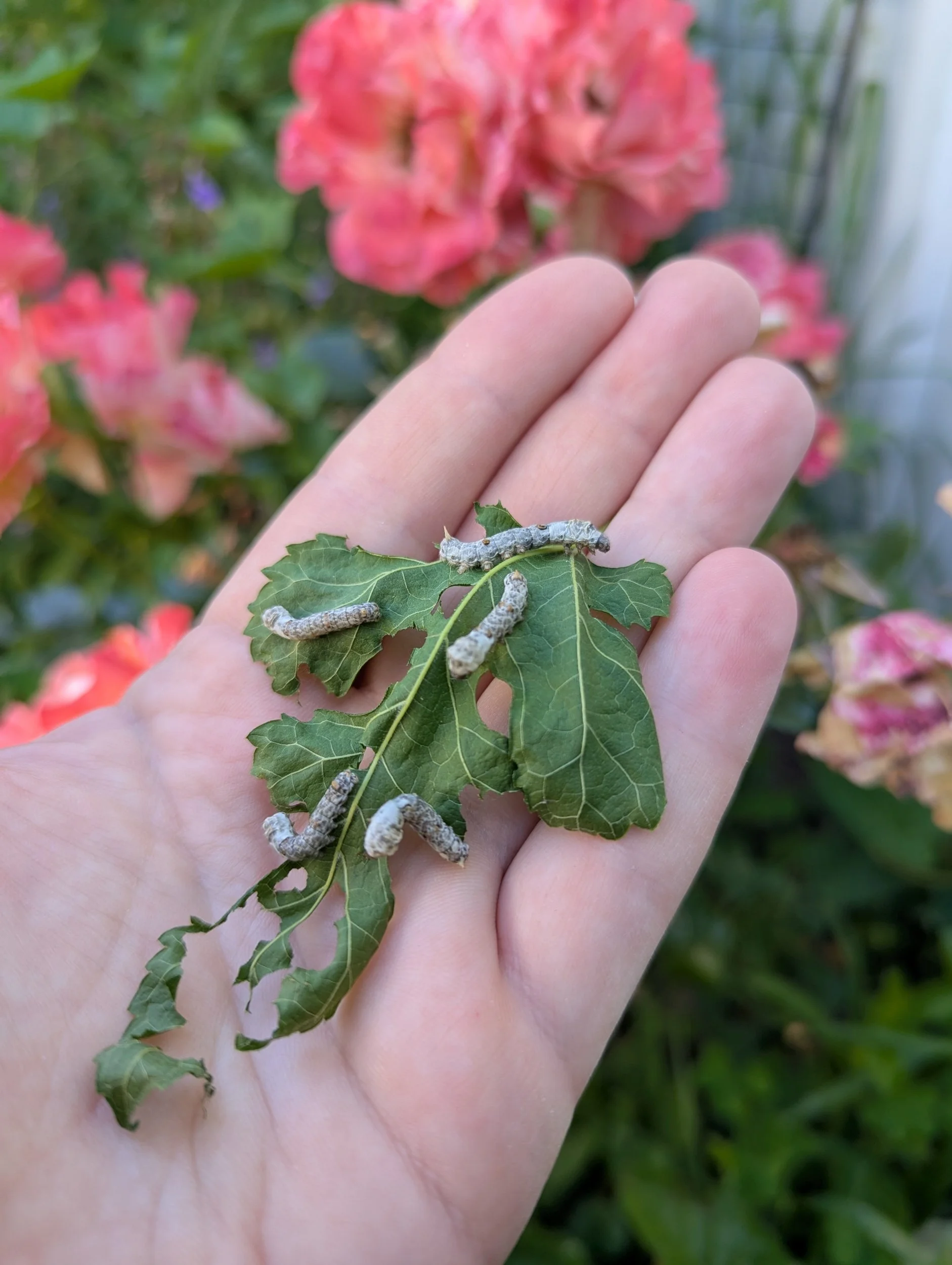
My children have a litter of baby bunnies this spring, adorable creatures. The kits are housed right outside the mudroom where I keep the thousands of worms. The boys tend to run through the worm room for the purpose of carrying baby bunnies to and from their play room upstairs. This excitement means my worm door is constantly ajar, and I am unable to maintain the perfect temperature the worms desire. The worm room door was left open over night, I found cold, cuddled worms this morning. They won’t desire to eat till they are warm, I have a few hours.
Yesterday’s blog post was about the story of how worms were stolen from the people of Seres, smuggled along the silk road, to be placed in the hands of Emperor Justinian of the Byzantine Empire, thus beginning a new era of sericulture in expanded lands. To summarize, I consider the story fantastical, an attempt to sell more tablets at the publishers! (slid in a researcher’s joke- tablets, like as in clay writing tablets)
Immediately after the blog went live, I had the joy of receiving the question from the worm expert himself, thank you Michael at WormSpit. He had come to the same thought long before my brain began to churn on the subject, what did the worms eat when they arrived at the Emperor’s palace? There is no mention of Mulberry trees in the history of the worm heist. I had thought I had perhaps missed the tree in translation, but Michael’s words reassure me of a very distinct lack of tree in the text of the story.
I believe the trees are never mentioned because they were already commonplace. Tended gardens of Mulberry are present in the Royalty gardens of later Medieval sericulture. But, groves of Mulberry were already in abundance along the silk road and far beyond, with Mulberry tree providence well into the Roman Empire.
First, providence- I went to the cookbooks for Mulberry recipes. If you are a historical cooking fan then you must have a copy of the very first cook book, written by the name Apicius sometime in the 4th to early 5th century, Cooking and Dining in Imperial Rome., known in the original as the De re culinaria. This text predates the story of the worm heist. On page 52 of the modern printing, #24 is a recipe for preserving Mulberries, a early form of canning.
Mulberry trees spread through seeds spread by animals, in vast areas and quantities. The tree is quick moving. I have uprooted small trees to see them thriving in the burn pile. To me, it is logical that a fast growing and fruit bearing tree would be a welcome sight along travel routes, like the Silk Road. If I publish this writing, I’ll need to find the page, I was reading a book about Viking goods traded on the silk road, trees and fauna were traded items. Bulbs and roots are transportable goods, much easier than frail, climate sensitive insects. I can easily imagine the trade of fruiting trees, including the prolific Mulberry.
The reason this blog took an extra day to post is because I felt motivated to go read Pliny the Elder text, as his first century Roman writings include a whole book on his favorite trees. And behold, the Mulberry tree is his favorite tree. He declares it the smartest tree. Fancy that, Mulberry is quickly becoming my favorite tree, too! and I thought I would never find common ground with Pliny.
For kicks and giggles, the Mulberry is Pliny’s favorite tree, the Morus in the Latin, for it is wise in its behaviors. The tree holds back its greenery until the risk of frost has past. He also notes how the Morus, in poor soil, tend to shed leaves earlier. and fruit bearing is poor in challenging conditions. We should open in idea that ancient people were tree experts and persistent through centuries in their forestry; passing down orchards, as much as land, in deeds from generation to generation as family wealth. Bringing worms to town was probably like placing a duck on water.
I am trying to decide where to put the history of silk worms from India in this conversation because that matters as a half-way point in the Silk Road. Their history of worms muddies the waters of understanding of the great worm heist even more. Ehhh, pass today.
References.
Apicius. Cooking in Imperial Rome. #24.
Pliny, Natural Histories. lol its so cute how short!
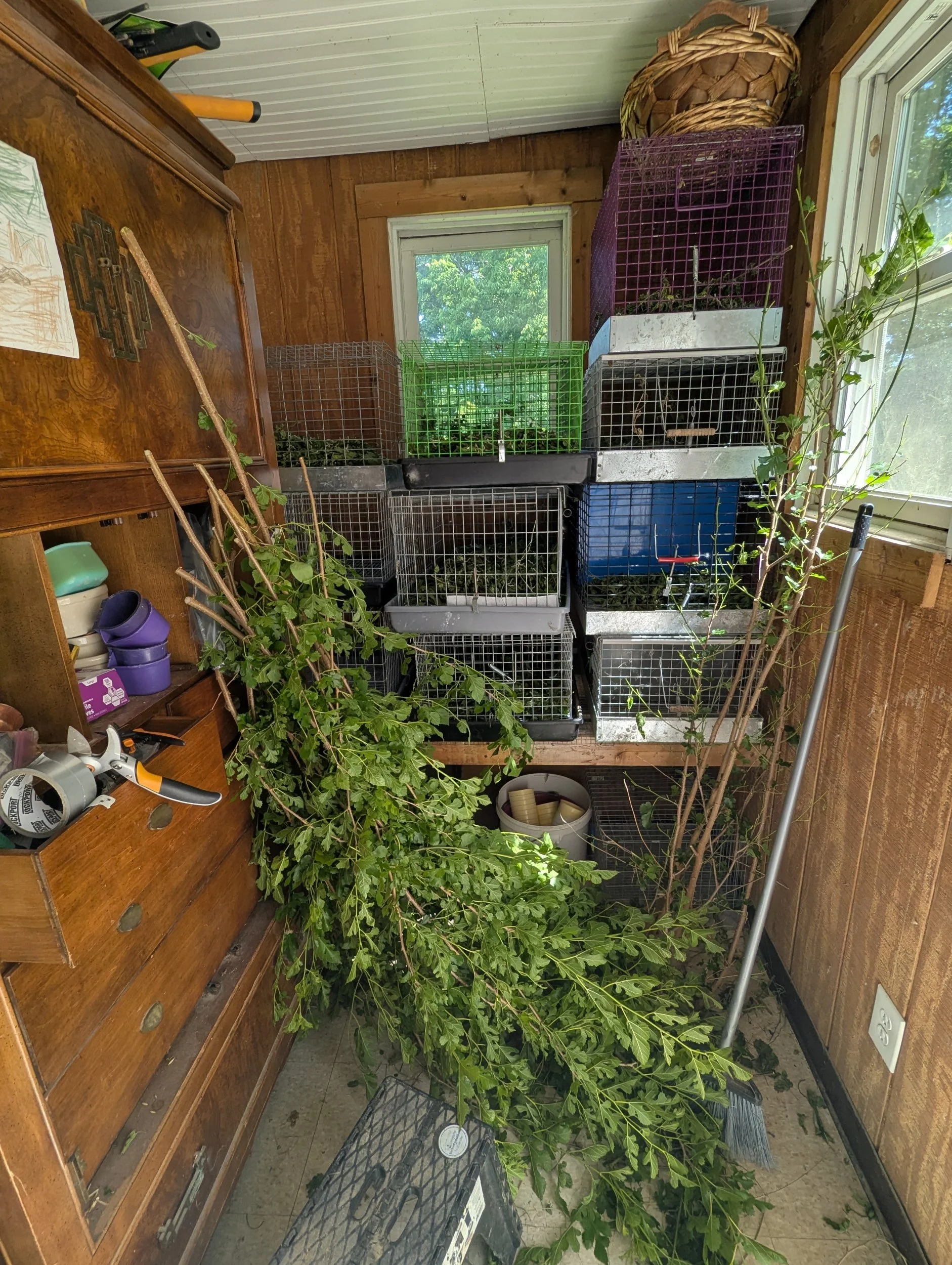
Preparing to feed the worms
A morning feeding is about four trees, the trees were three years old. I trimmed the trees to the main trunk, leaving three inch branches for regrowth of the tree. I will rest the tree next year, and harvest again in 2028.
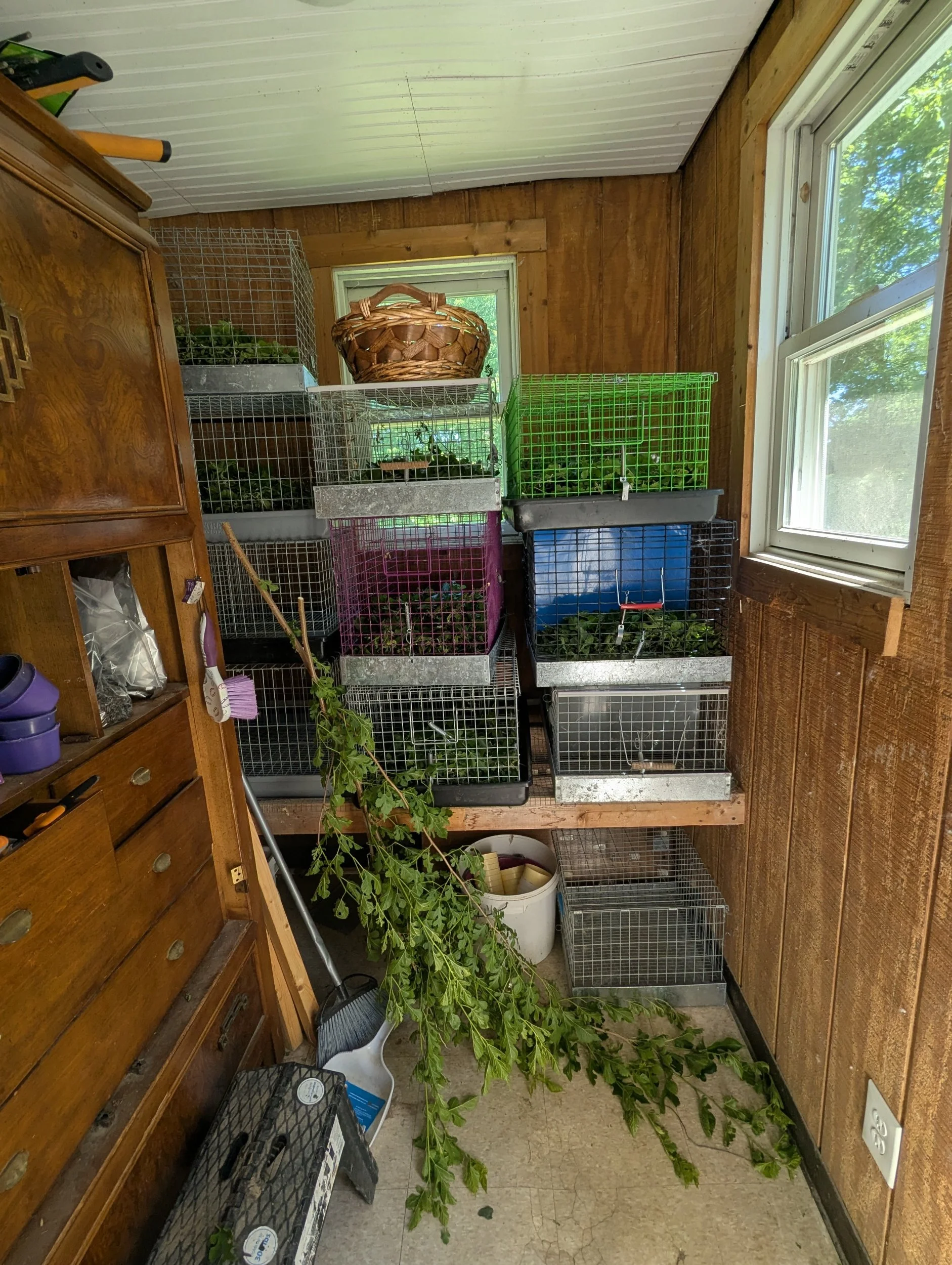
After feeding worms in each cage
This was how much was left over after feeding. Amount of leaves is not an exact science.
I spent three hours feeding today. I delight in the peace of listening to books while trimming leaves, coffee near by.
Seriously, I wish I could do this full time. I love it so much.
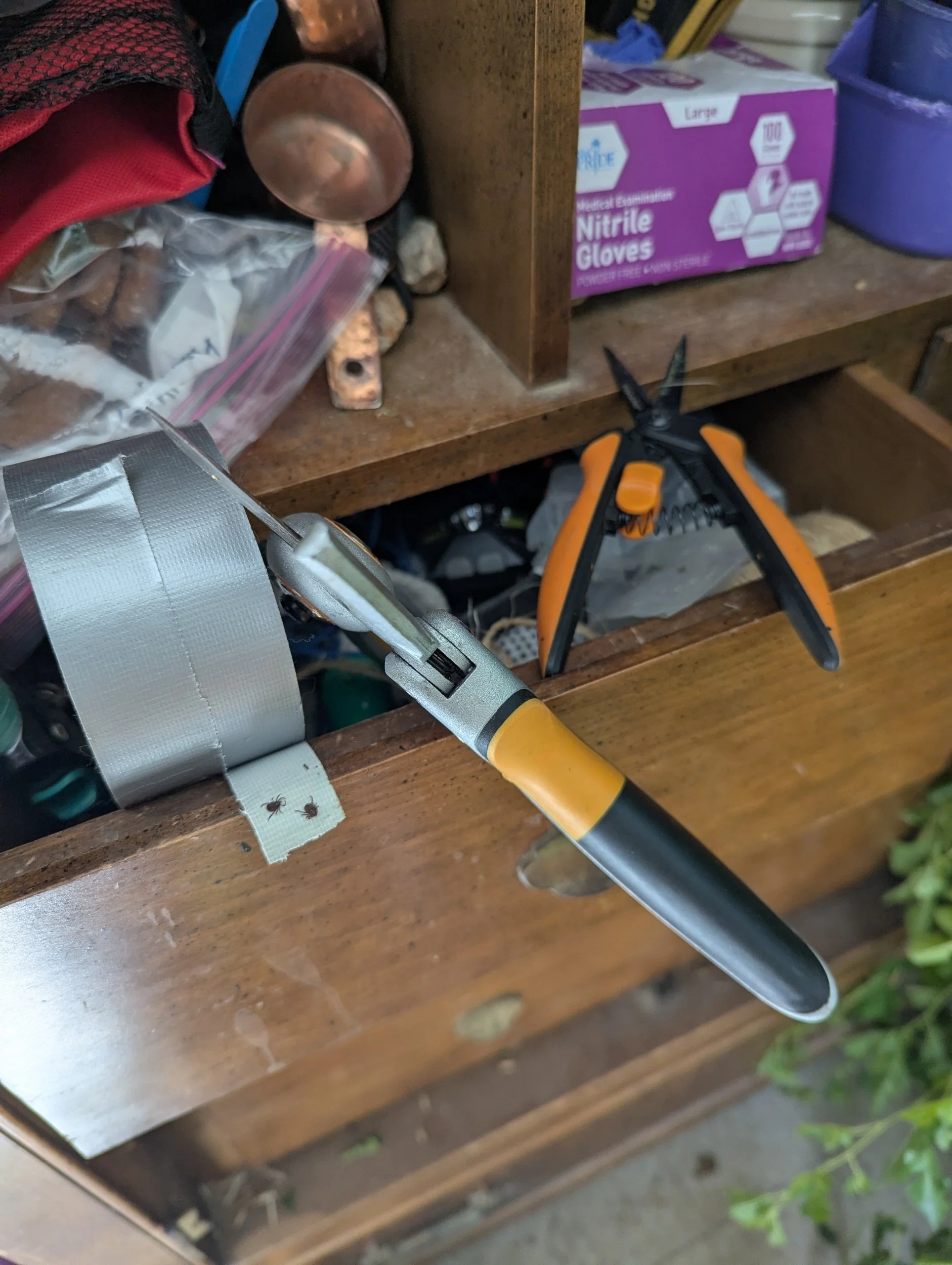
My tools
I’ve found the Fiskars brand to be my very favorite in tool brands. I depend on those scissors for everything, owning several dozen pair. (I shear the angora rabbits with the small shears).
Then the big nippers for 2” lops.
And tick tape, they hide on the bottom of Mulberry leaves waiting for me. I’m finding less and less ticks each day as the birds clean up the spring hatchings.