Location, Location, Location
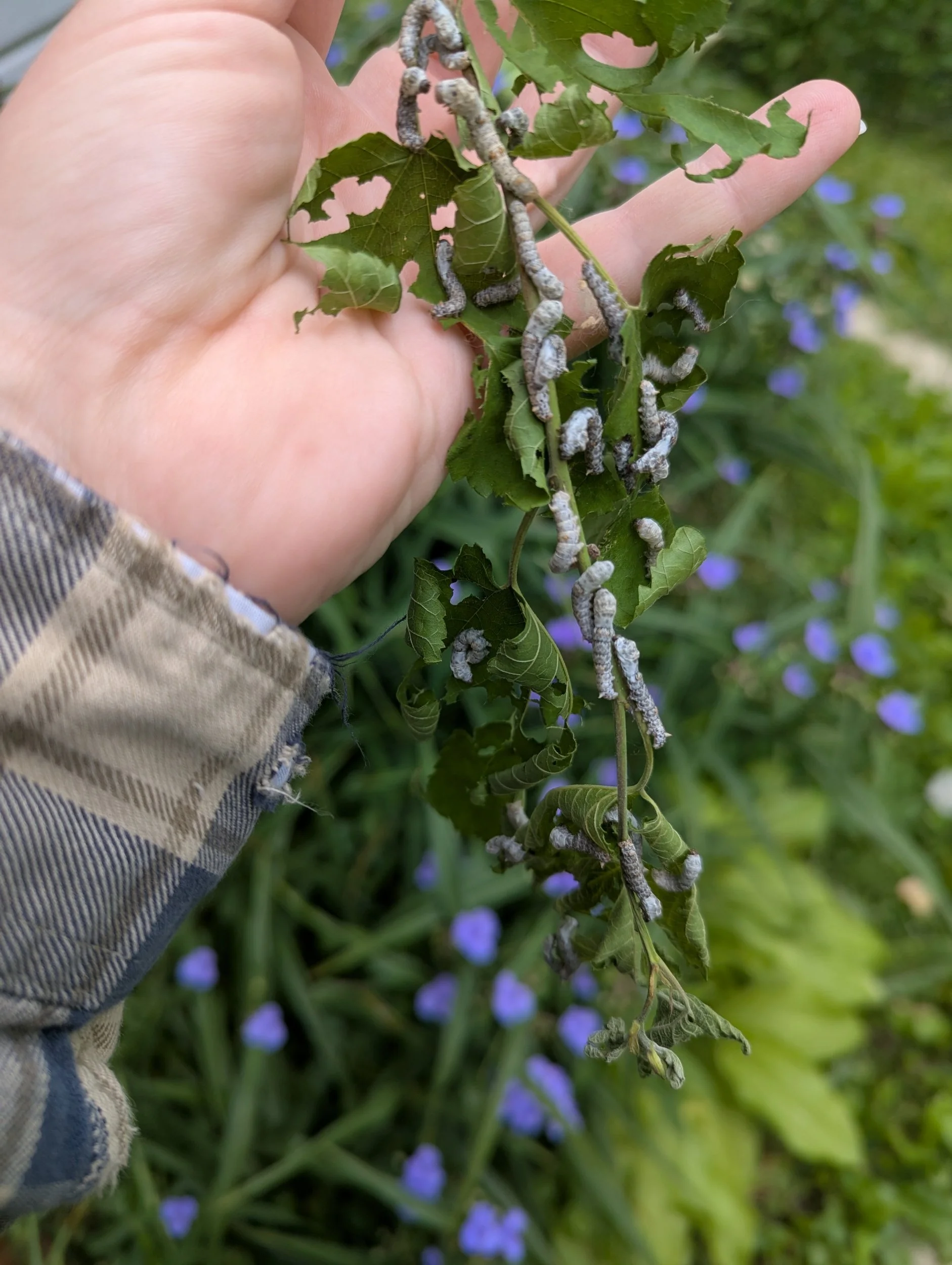
The worms have precedence going back to the Neolithic period, 7,500 years ago. The Yellow River, slightly South of Beijing on a modern map was the home of the tiny moth silk weavers, we think. I read a source, The Silk Weavers Notebook suggesting that India has precedence going back even further, but I have yet to come across specifics as to what and where in India that does predate the Yellow River storyline. The problem with China’s proofs of worms in their history is that they lost most and greatest of their vast libraries. 212- 213 BCE is when everything was burned to the ground and the scholars were slain as well. The books on silk studies mourn this year for its great loss of text regarding the history of China, the bloody event must have been something. Wikipedia has a fascinating article on this historical event, named well “Burning of books and burying of scholars”.
The timeline of the Europeans raising of silk worms is a multi-layer pudding in my mind, not yet organized into a timeline. An excellent idea for a post. We can start with an overview, lots of royalty of many wealthy countries attempted to raise silk worms in great enough quantities to garb their own and have trade power. Some royalty were successful, proving skills at the business and sericulture ends of the trade. Many, well most royalty it seems, failed to maintain any sort of silk raising program. Multi generational sericulture in Europe was best served by capitalism it seemed, and centuries of building on the failures of previous, well-funded generations of attempts. 15th to 16th century was when worms took off in Europe imo, attempts started with the many empires of West and East Europe after the Monks smuggled worms to Europe in 809. I would think that the Mulberry trees would have been well established, invasively thriving, at a similar comparative rate of success to that of the thriving cocoon industry. I’ve never gone to Europe to specifically take notice of Mulberry tree populations, but I want to. The conditions for the trees’ needs is like that of Ohio, Pennsylvania, and Indiana with wet springs and humidity. My best leafed Mulberry live in the shaded area under the white pine trees where it is wet, cool, and rich soil from decades of pine needles protecting the soil and preventing erosion from the invasive Earth worms we have spreading in the area. (the local state park has a fishing lake which is blamed by the DNR for the purchased invasive fishing worms). (Mulberry growing in direct sun get a sorta blight, the leaves, especially the younger leaves, get yellow then brown and crispy when the the summer sun brings the afternoon heat above the 80s.)
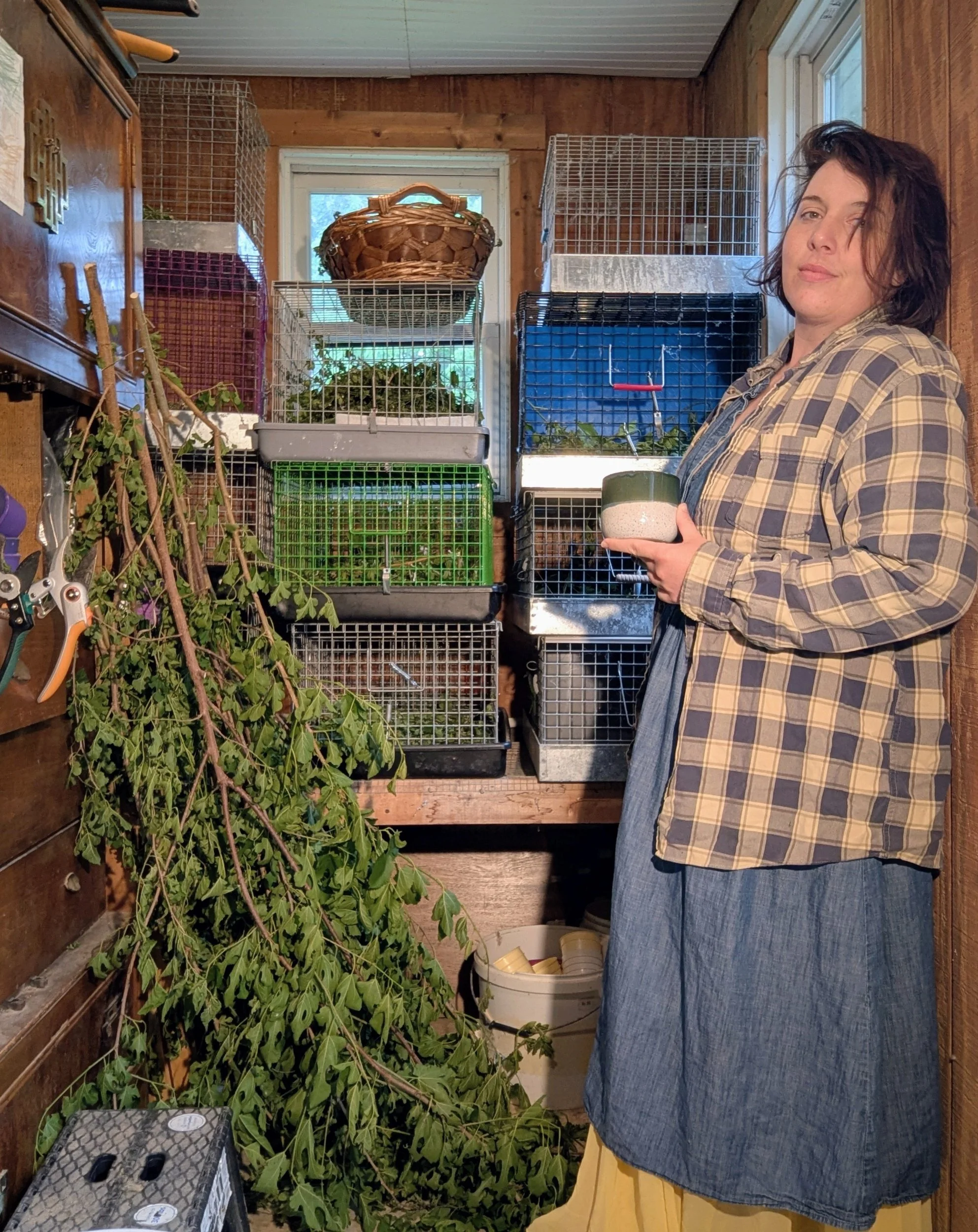
Think like the worms, that is what I say. I raise my worms in an area like that of where the freshest leaves grow. I replicate the conditions of young Mulberry trees growing in the shade on a humid spring day, the perfect 78 degrees and feels like rain. That area in my life is my mud room on the back North-East corner of my house, very close to the woods and large trees. Many creatures like to eat worms, ants and mice and my son’s English Angora rabbit have been the primary predators of the silk worms living in my mud room. Ants always, the mice love to eat the worms and live in the corners of the cocooning areas. The mud room helps regulate all those things.
The first year in raising worms, a great heat wave hit Ohio. 106 degree day on June 6th of that year, about five days before my 2,500 worms were expected to cocoon. It was a terrible situation for my rabbit farm and my silk worms. I had many of my kids’ summer show rabbits living in the silk worm area, as to only cool a single space. I had noticed the English Angora doe eating mulberry leaves, then one evening, I saw her slurping worms and realized she had been slurping worms for days, while she enjoyed the AC mud room, bad bunny! All the cage spaces around her were worm free! And the worms were three inches in length and gooey with silk, I’ve never seen a rabbit eat like that before or since. I ended up with 1,625 worms cocooning, the heat wave took the rest. Minus the ones Snoopy ate.