The first ten days of feeding worms
The primary goal of this writing is to beat into the readers’ mindset just how much mulberry leaf is required to sustain the remarkably tiny creature.
Maybe it's best to think of things like worms in round numbers. 1,000 silk worms, how much do they eat? 1,000 cocoons will make what fiber artist think of as the ‘cowl’ amount. When a spinner makes a yarn, the objective usually is to at least make enough yarn for a simple garment like a cowl, 1,000 worms = a cowl of sorts.
When 1,000 worms hatch, they require a branch worth of food. From that day forth, the number of heartily leafed branches duplicates with each feeding. The second feeding is two branches, the third feeding on the morning of day 2 is four branches, later that night the worms will eat nearly 8 branches of only mulberry leaves.
This morning, it took me 45 minutes to trim the number of branches required to feed my several thousand, week old worms. A feeding session in a few weeks will be four to five hours of processing, twice a day, that number of branches simply uncountable.
I once thought of leaves in terms of bucket loads, wheel burrows full, truck beds overflowing with whole mulberry trees. This year, I am measuring the feeding of worms in time, my time.
The first week of worms is about spring preparedness, cleaning the area, parasite and ant prevention, and general delicacy in my labor. Going forth, the feeding of worms will be measured in hours a day. Today, Thursday, day 8, I expect to spend 100 minutes today in worm tending. The math is easy, 2,250 worms=100 minutes on day 8. For 1,000 worms, 45ish minutes in the day.
I expect the feeding time of the worms to platue around day 30 as they hit their max capacity eating abilities, or so it has been of years past. Be ready for my lamenting regarding my 18 hour harvesting days.
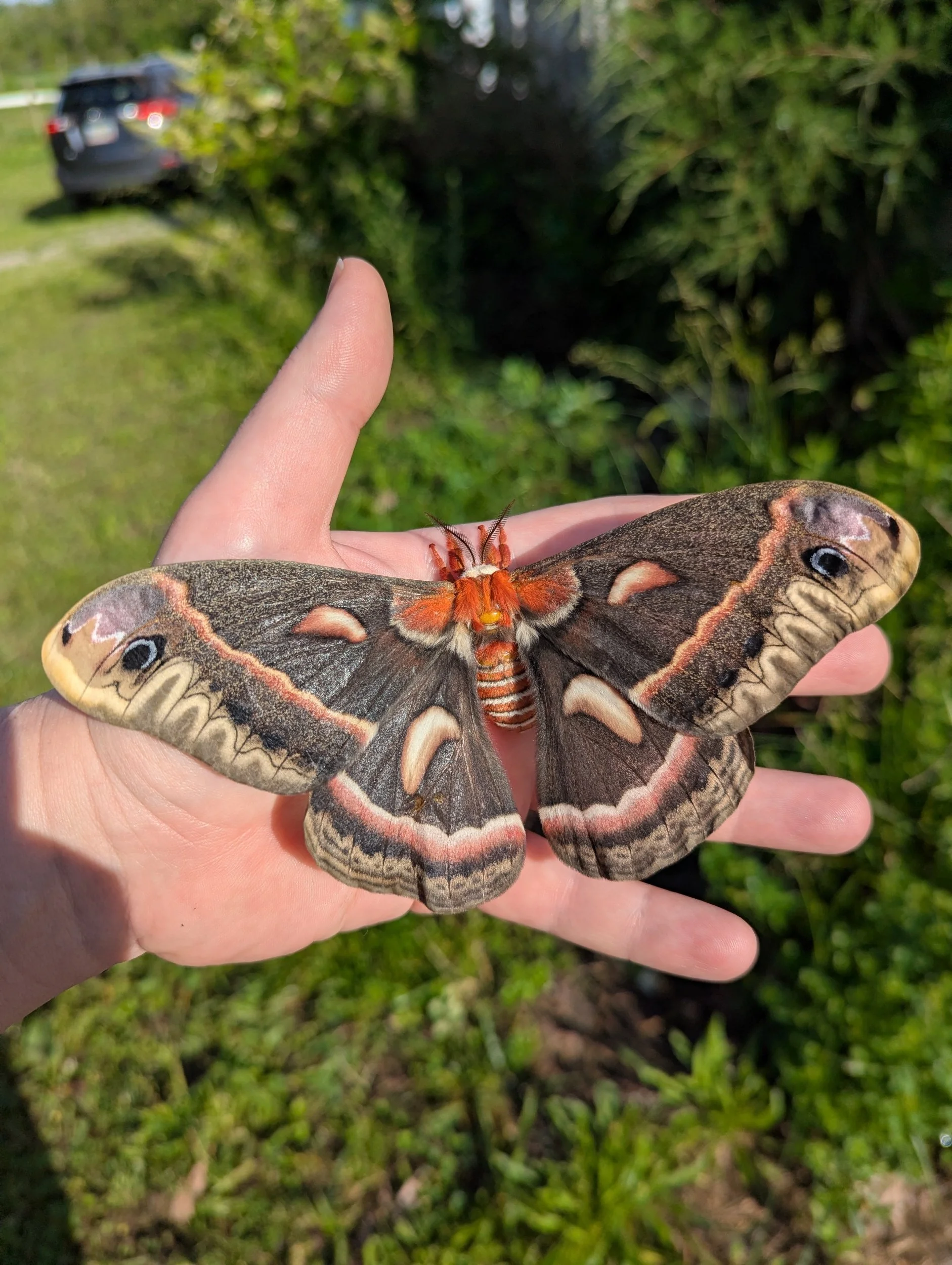
I tried my hand at capture and potential release for wild silk, but I only caught females. They laid empty eggs, their wings having defects. I have ideas to improve for next year. Why I mention this failed project is because of the feeding needs of wild moths, I've heard they need 25x more food than the domesticated bombyx mori. Start small was the advice given. I've resorted to hunting the undersides of leaves for wild laid eggs.